I had an idea. Goal-setting - specifically the bit nobody talks about, which is that
most people are doing it backwards. They start at zero and try to inch forward. Whereas if you start at the goal and work backwards, the whole thing gets a lot easier. That's the concept, anyway.
I needed a metaphor to make it land.
The first one I reached for was a tree. Start at the base, work up to the bud - difficult. Reverse it, start from the top down - easier. Made sense in my head.
Decodefy told me it was a bit rubbish. Not in those words, but that was the gist. Its point was that trees grow upward - that's the whole thing about trees - so asking someone to mentally reverse that direction actually works against the image you're trying to create. You end up fighting the metaphor instead of using it.
Fair enough, actually. I hadn't thought about it that way.
So I pushed. Told it the suggestions it came back with were a bit meh - which they were, to be honest - and asked for something more original. Something that didn't just explain the concept but made you feel why it mattered. And I said I wanted some propaganda in there.
Not the bad kind. The kind where
the argument is so clean that by the end of it, people can't see any other way of doing things.
It came back with five options.
The one it flagged as strongest - and the one I agreed with - was
the forensic investigator. A detective doesn't walk into a city and start wandering around hoping a murderer eventually shows up. They start with the body. They work backwards through the evidence until the answer reveals itself.
That's reverse goal-setting. And I thought - yeah. That's it.
I should say, I don't know if I would have got there on my own. Maybe eventually. But the fact that it pushed back on the tree thing, that it told me the first three alternatives were a bit ordinary and kept going -
that's not what I expected from a content session. That's what happens when you're working something out with someone.
From Concept to Pillar Post (With a Brief It Built Itself)
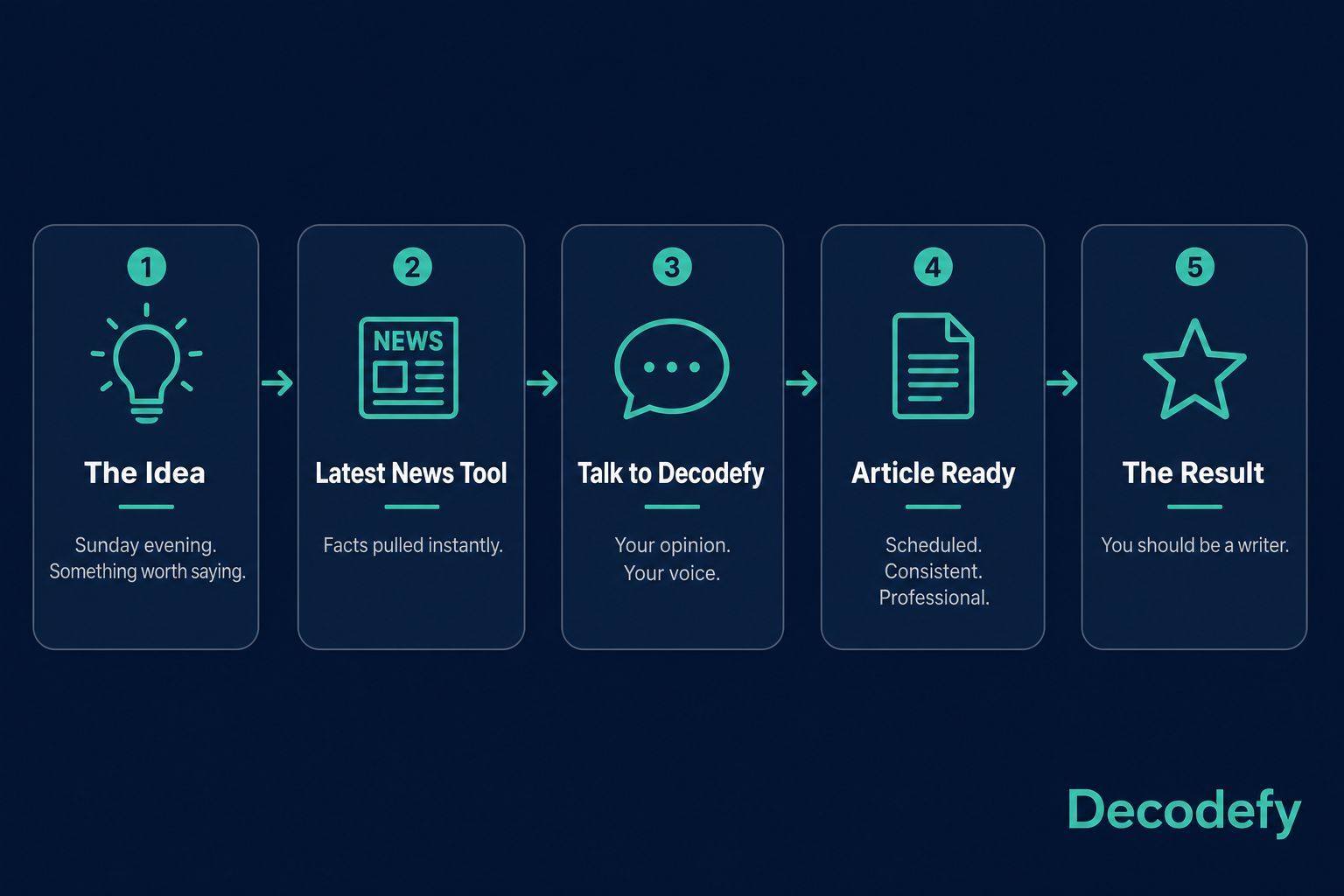
Once the metaphor was locked, I asked it to build the pillar post outline.
Now, normally this is where things slow down. You've got the idea, you know roughly what you want to say, and then you spend the next hour trying to work out the structure - what goes where, what the argument actually is, whether the thing hangs together.
It's the bit most people either skip or get wrong.
What happened here was different.
Before it built anything, it applied the critique skill - basically checked what I was asking for against how it knows I write and what the content is supposed to do. Then it retrieved the content brief, had a look, and said: right, got everything I need. And built the outline.
The outline itself was good. Really good, actually.
A proper argument structure - not just a list of headings, but a case being made from the first section to the last, with each part doing a specific job. And then at the end it produced something I hadn't asked for: a propaganda checklist. Reasons why the argument works psychologically, what it triggers in the reader, why the detective framing makes the whole thing harder to disagree with.
I thought - I didn't ask for that. But it's exactly right.
The RAG system kicked in at this point too. I'd deliberately deleted the testimonials and case studies from the database - I wanted to see what it would do without them. What it did was
flag the gap, tell me it was going to use my origin story instead, and then do exactly that. It didn't freeze. It didn't produce something vague and generic to fill the space. It just found the next best thing and used it.
That's worth pausing on for a second. A lot of content tools, if something's missing, either make something up or leave a placeholder that you then have to go back and fill.
This one told me what was missing, told me what it was doing instead, and kept going.
The outline it produced had six sections:
- Hook - straight into the detective scenario, no preamble
- Diagnosis - naming what people do wrong, without lecturing
- Reversal - the method, clearly argued
- Why this feels harder than it is - the bit most people skip
- Evidence - my origin story, used in place of the missing testimonials
- Close - looped back to the detective metaphor from the very beginning
I genuinely didn't tell it to do that last part.
The Full Post, Section by Section
I asked it to write the post one section at a time. Partly because I wanted to see each piece before it moved on, partly because - and I'll be honest here -
I wasn't entirely sure the argument would hold all the way through. It's one thing to have a good outline. It's another thing to actually execute it.
It held.
The hook jumped straight into the detective story. No preamble, no "in this post I'm going to..." - just straight into the scenario. Someone standing at a crime scene with no body, no evidence, no starting point. Wandering around hoping something turns up. And then the turn:
that's what most people's goal-setting looks like.
Hard hitting. I liked it.
The diagnosis section did what a good diagnosis should - it named the thing people are doing without making them feel stupid for doing it. That's harder than it sounds. There's a version of this kind of content that lectures, and a version that just quietly holds up a mirror.
This was the second one.
Then the reversal. Then the section on why this feels harder than it is - which, actually, is the bit I think most people skip when they're writing this kind of piece. They give you the method and leave you to figure out why you've been resisting it. This section didn't do that.
The evidence section used my origin story - given the testimonials were gone, that was the right call. And the close came back to the detective. Not in a heavy-handed "and so, just like our forensic investigator..." way.
Just simply, in a way that made the whole argument feel complete.
Then it asked me: want me to assemble all six sections?
I said yes. And then I remembered I'd never actually specified it was a blog post. So I asked it to pull everything together, add a headline that was both viral and SEO-optimised, and add subheads - because we don't want skimmers missing the argument.
It handled that without any fuss.
The headline it came back with was good. Not the first version I'd have written, but probably better than the first version I'd have written.
The assembled post was clean. Six sections, proper subheads, argument intact from the detective opener all the way to the close. Ready to publish - or near enough.
That took one conversation. Start to finish.
One Post Became a Full Campaign (Without Asking)
This is the bit I find hardest to explain without it sounding like I'm exaggerating.
Once the post was assembled, it asked if I wanted a LinkedIn version. I said yes. Then I asked for Facebook. Then X. Then I asked for an infographic - and I'll be honest,
I wasn't expecting much from that one. Infographics are the thing everyone says they need and nobody quite manages to make look right. This one was good. Really good, actually. Not the dimensions I wanted - we're working on that - but the idea behind it, the way it distilled the detective argument into something visual, was exactly what I would have asked for if I'd known how to ask for it.
Then I asked it to create a free offer.
And this is where it stopped being a content session and became something else.
Because
a free offer isn't just a PDF. If you're doing it properly, it's a whole thing. You need:
- The offer itself
- A snippet for the blog post and a CTA button
- A landing page with email capture
- A thank you page with a soft CTA
- A follow-up email sequence that actually does something - not five emails that say "don't forget to download your free thing," but five emails that give real value and, somewhere in there, make a case for why the reader might want to go further
I typed all of that out in one message. Every piece I needed.
It built all of it.
Landing page copy - done. Thank you page with a soft CTA to book a Decodefy demo - done. Five-day email sequence, every email with a subject line and preview text, the last one with a gentle close - done. And then it asked if I wanted the PDF lead magnet itself, which I hadn't got to yet. I said yes. I asked if it knew how Gamma formatted its build instructions. Decodefy AI wasn't sure, so
it searched the web, checked three sources, came back with exactly what Gamma needed, and produced the full build instructions.
I put those instructions into Gamma. It worked first time.
So at the end of this - one conversation, no switching between tools, no going back and forth across platforms - here's what existed that didn't exist at the start:
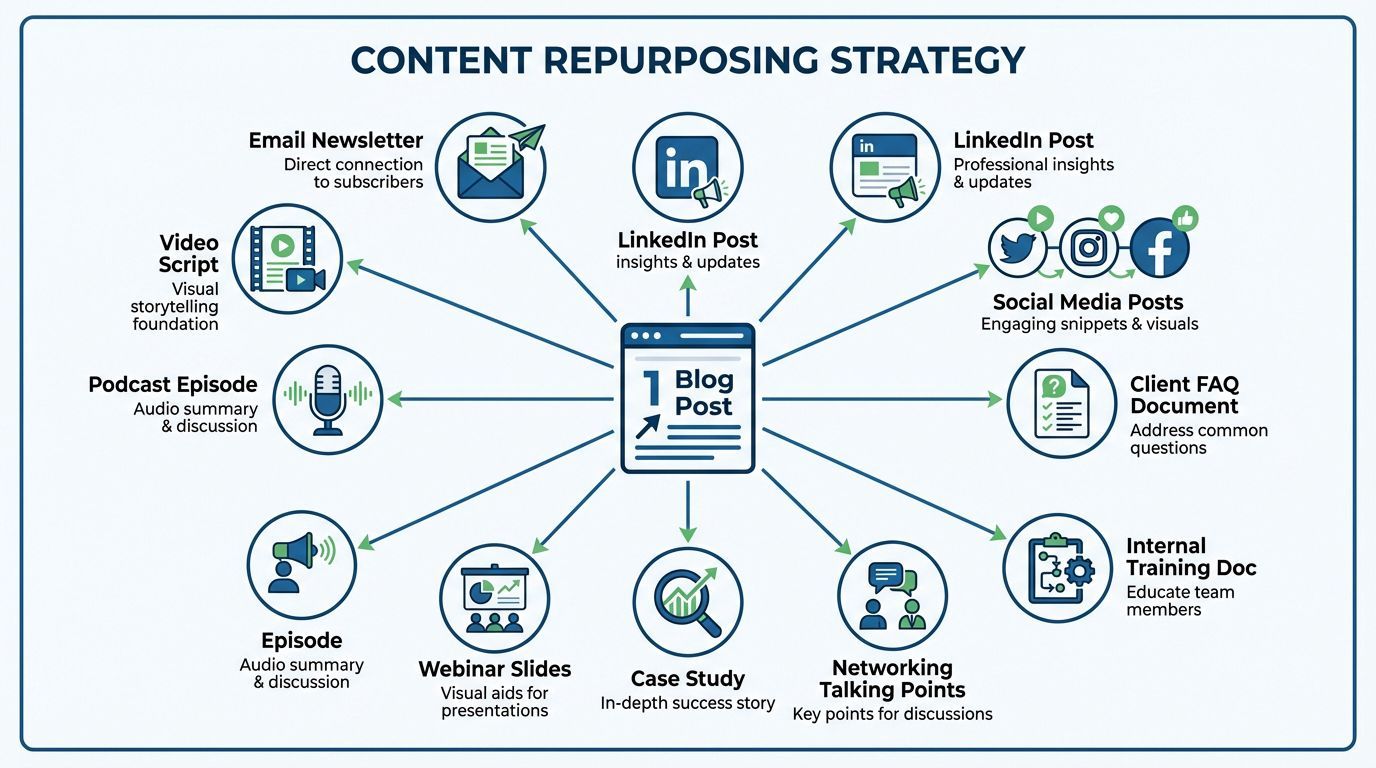
- A pillar post
- LinkedIn, Facebook, and X versions
- An infographic
- A PDF lead magnet, built and ready in Gamma
- A landing page
- A thank you page
- A five-day email sequence
- Social posts to promote the lead magnet across all three platforms
Every piece. One campaign. One conversation.
I've been doing marketing for over twenty years. I know what it normally takes to produce a list like that. It's not one conversation.
Want to see how Decodefy AI can help you?
If you want to see what Decodefy AI does with your idea - your topic, your voice, your argument -
that's what the demo is for.
There's a link below. It's not a hard sell. Just a conversation, same as this one was.
See what comes out the other end.
Demo Decodefy AI