
November 26, 2025

Why your AI content sounds like everyone else (and how to fix it)

Author

Jonathan Young

Share

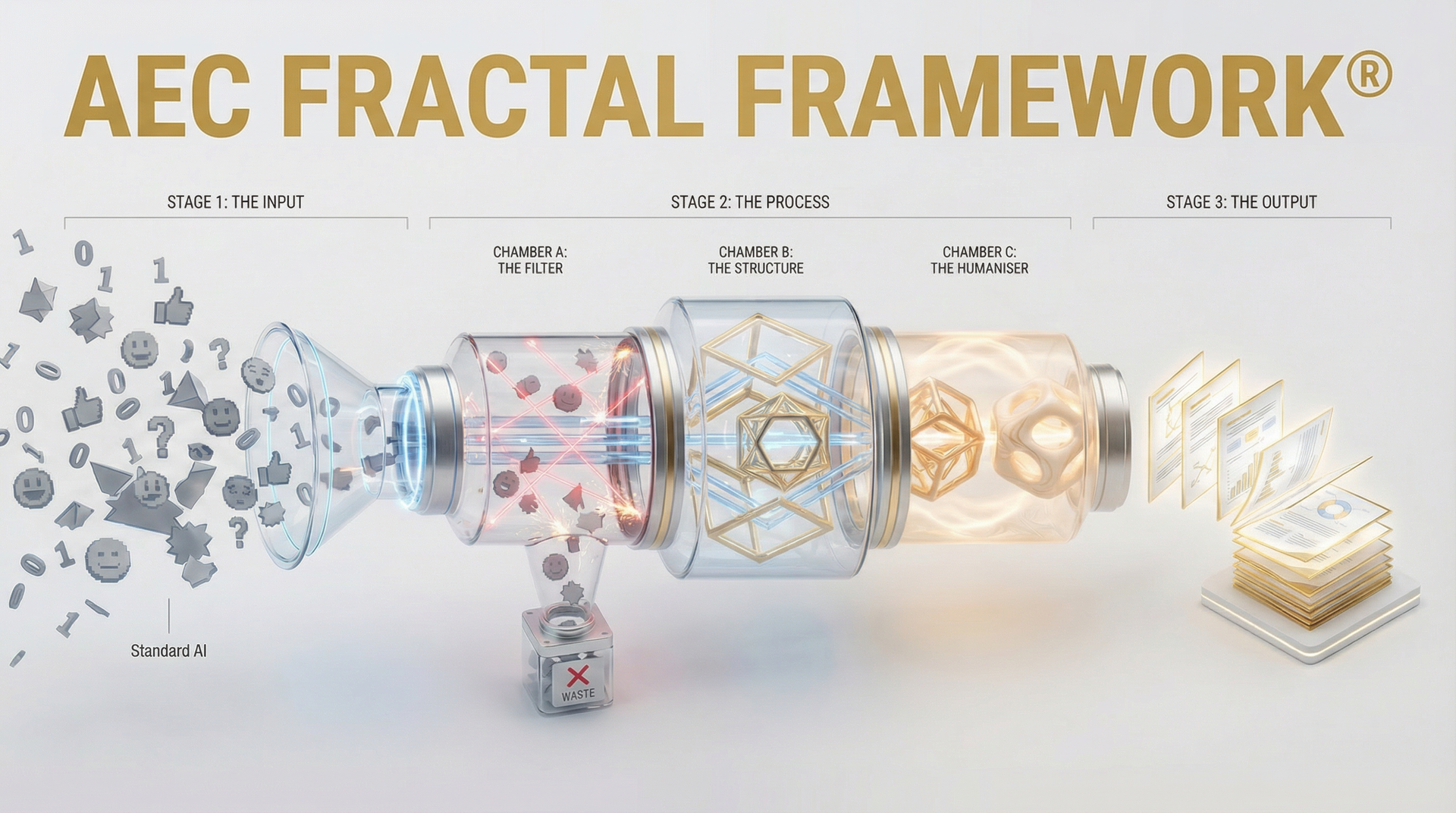
AEC Fractal Framework Process Map

We need to talk about the word "delve". And "landscape". And "game-changer".


If you have used AI for small business marketing recently, you know exactly what I mean. You type a prompt into ChatGPT or Claude, expecting a professional post.


What you get back is a wall of text that sounds enthusiastic, polished, and completely soulless.


It’s the "Plastic Voice". And right now, it is flooding LinkedIn feeds and business blogs across the UK.


The problem isn't that AI is bad. The problem is that you are using it naked.


The "Slot Machine" Problem

Most business owners treat AI content generators (ChatGPT, Claude, Gemini) like a slot machine. You put a coin (prompt) in, pull the handle, and hope for a jackpot.


But LLMs (Large Language Models) aren't designed to be creative. They are designed to be average. They predict the most statistically probable next word.


That means if you ask for a blog post about plumbing or accountancy, the AI gives you the average of everything the internet has ever said about plumbing or accountancy.


It is bland by design.


If you publish that raw output, you aren't building a brand. You are adding to the noise.


The Missing Layer: Architecture

At Decodefy, we realised that high-quality AI copywriting requires a manager.


You wouldn't hire a junior copywriter and tell them "write something good" without giving them a brief, a tone guide, and a structure. Yet that is exactly what we do with AI.


That is why we built the AEC Fractal Framework®.


Think of it as a filter that sits on top of the raw AI. It forces the model to stop acting like a robot and start thinking like an elite British copywriter.


It works in three stages:


  1. The Filter: Before a single word is written, the framework bans the clichés. No "unlocking potential". No "seamless integration". If it sounds like marketing fluff, it gets vaporised.
  2. The Structure: It creates "Trust Gravity". Instead of waffling, it organises the content into psychological loops that keep the reader engaged.
  3. The Humaniser: It applies strict brand voice consistency. It uses sentence fragments. It drops the corporate jargon. It sounds like a conversation, not a press release.


One Standard Deviation

There is a rule in psychology: if you try too hard to sell, people pull away.


Standard AI tries too hard.


  • It uses exclamation marks!!
  • It uses emojis 🚀.
  • It begs for attention.


The AEC Framework applies the "One Standard Deviation" rule. It dials the hype back. It focuses on competence and authority.


It doesn't scream "Buy me!"


It says, "Here is the problem, and here is why we are the ones to fix it."


Stop Editing, Start Publishing


The biggest cost of using AI tools for content isn't the subscription fee. It’s your time.


How many hours have you spent deleting paragraphs of robot-speak? How many times have you rewritten a post entirely because the AI just didn't "get it"?


That ends today.


When you have the right architecture, the output is 95% ready on the first draft.


You don't need to be a prompt engineer. You just need a system that understands how humans actually read.


FAQ's

Why does my AI content sound robotic?

AI models like ChatGPT work by predicting the most statistically likely next word, which results in "average" or generic phrasing. They lack a specific psychological framework or "voice" to guide them, resulting in the repetitive, polished, but soulless style often called the "Plastic Voice."

How can I make AI text sound more human?

To make AI text sound human, you must move beyond simple prompts and apply a structural framework. This involves banning specific cliché words (like "delve" or "elevate"), varying sentence length to create rhythm, and using a specific persona, such as an "Elite British Copywriter", rather than a generic assistant.

What is the AEC Fractal Framework?

The AEC Fractal Framework is a proprietary software layer inside Decodefy that sits on top of standard AI models. It acts as a filter and architect, removing clichés and forcing the AI to use advanced psychological structures to create content that creates trust and authority, rather than just generating text.

Jon Young

Jon Young

AI marketing expert who cuts through the rubbish to give local business owners what actually works. Co-founder of FloweMedia and creator of the AEC Fractal Framework™. Obsessed with giving you 40 hours monthly back from admin chaos so you can focus on what matters: growing your business and having a life.


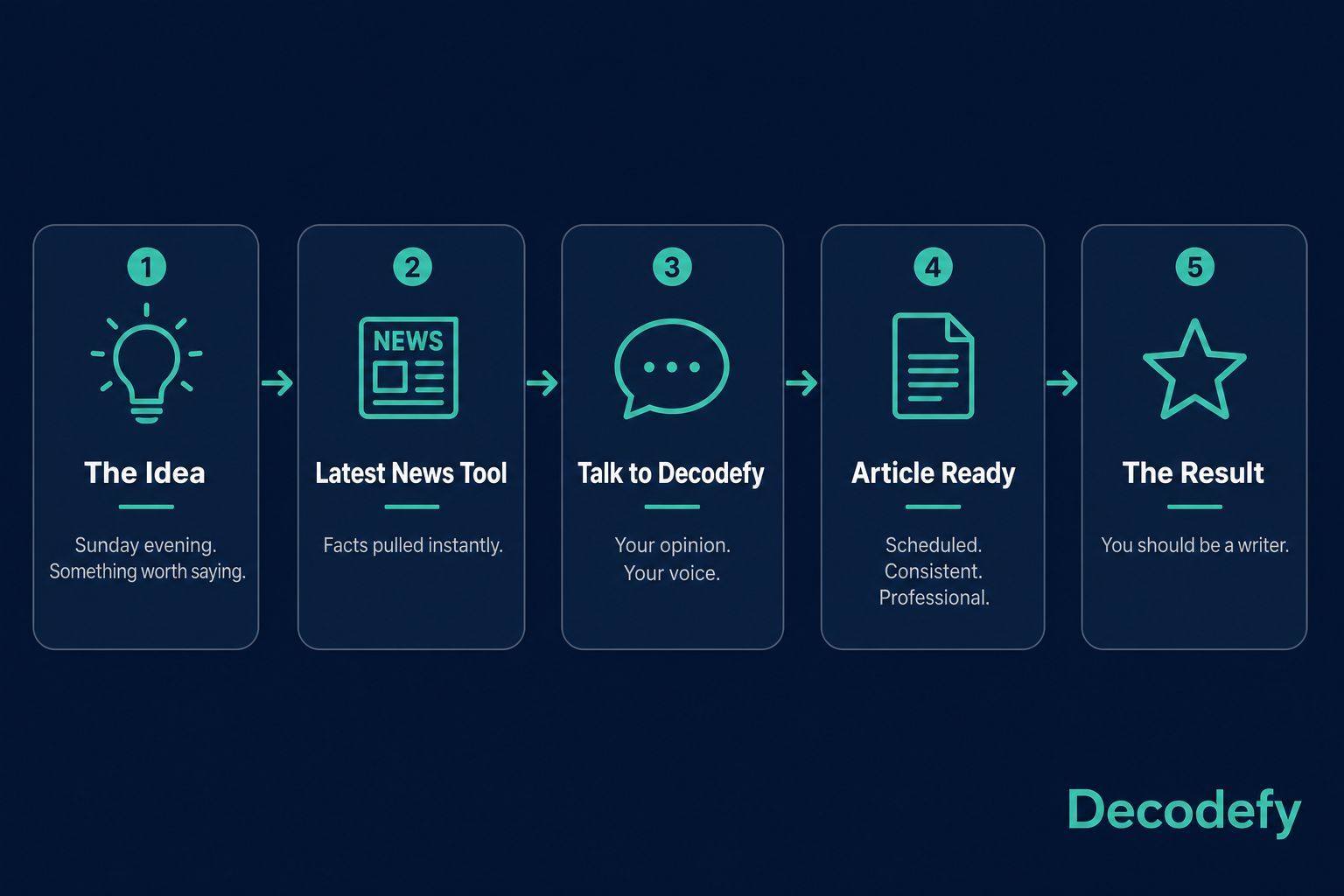
Five-step content creation process infographic showing how a commercial finance broker uses Decodefy
By Jonathan Young May 16, 2026
A finance broker with 20+ years' expertise couldn't get his knowledge into words. Here's how Decodefy AI writing tool changed that.

 Lawn Force Yorkshire lawncare specialists treating a residential lawn
By Jonathan Young May 6, 2026
Lewis Garth used Decodefy to write his Facebook ads. Last week: 47 new clients. 98% close rate. Here's why the numbers make sense when you understand what changed.

Felixstowe Barnacle local events website showing upcoming events listings on desktop screen
By Jonathan Young May 6, 2026
Jon saw local businesses invisible online. James built the machine to fix it. The Barnacle Project went live in days and Google found it immediately. Here's the story.

Chris Dyson, owner of Country Carpets & Beds, in his Hunmanby showroom - Yorkshire flooring and bed
By Jonathan Young May 5, 2026
Chris Dyson was losing sales he couldn't see. Missed calls, scattered communications, no follow-up. Here's how TryggR changed that - and what happened in week one.

Local UK plumber business owner reviewing AI-generated social media carousel ad on laptop screen.
By Jonathan Young April 24, 2026
ChatGPT just launched Images 2.0 - and it can create ads, carousels, infographics and more. Here's what it actually means for small UK businesses.

Empty auditorium with scattered empty seats representing the 1% of LinkedIn users who post regularly
By Jonathan Young April 17, 2026
Only 1% of LinkedIn's 1.3 billion members post regularly. Two of our clients found out what happens when you show up in that space with something worth reading.

Google Search Console performance chart shows Lemon Cherry's rise from page 4 to 1 in Google Search
By Jonathan Young April 15, 2026
Catherine Lambert knew her subject inside out. She just couldn't talk about it online. Here's what happened when that changed - and what Google Search Console showed us.
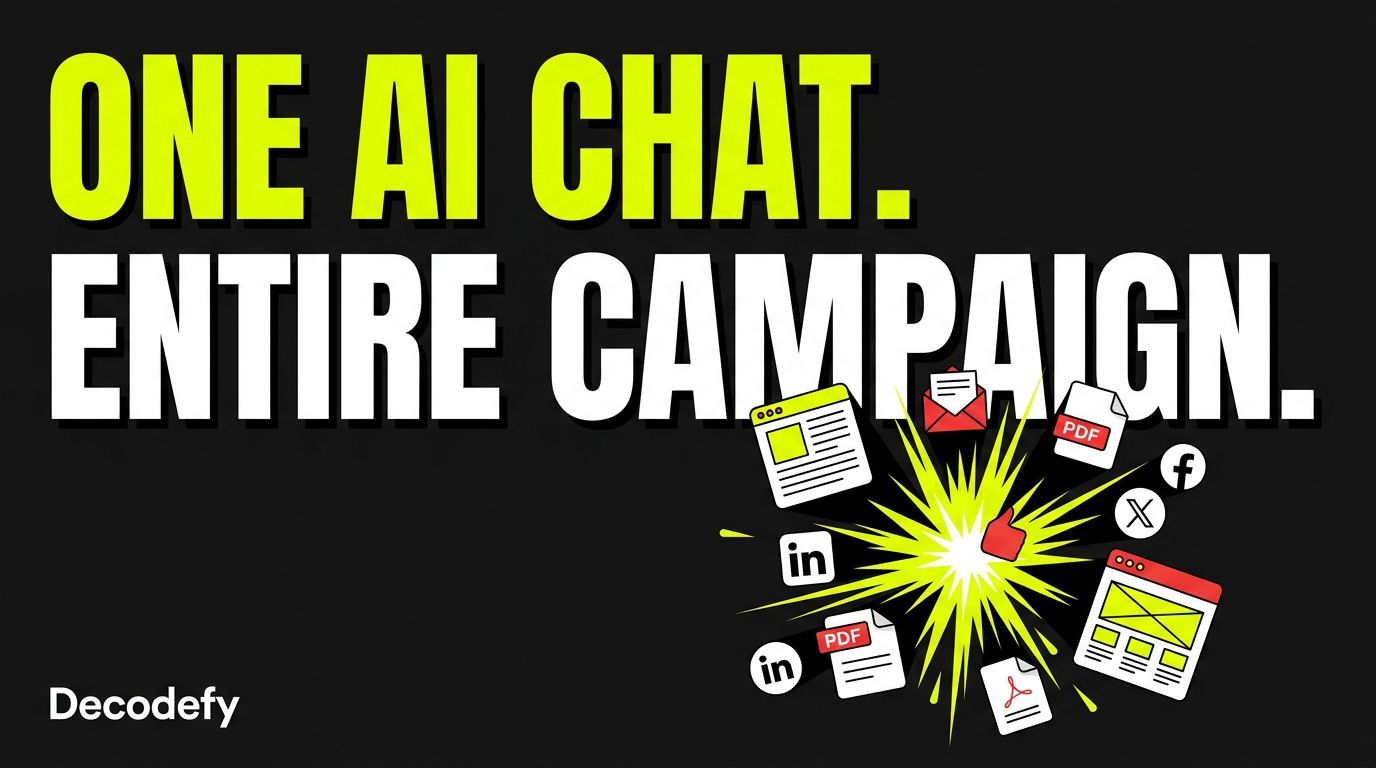
Decodefy AI thumbnail image showin one AI chat and a full campaign with icons for email and linkedin
By Jonathan Young March 24, 2026
One chat. One half-formed idea. What happened next was a complete content campaign - pillar post, email sequence, lead magnet, landing page, and more. Here's exactly what Decodefy did.
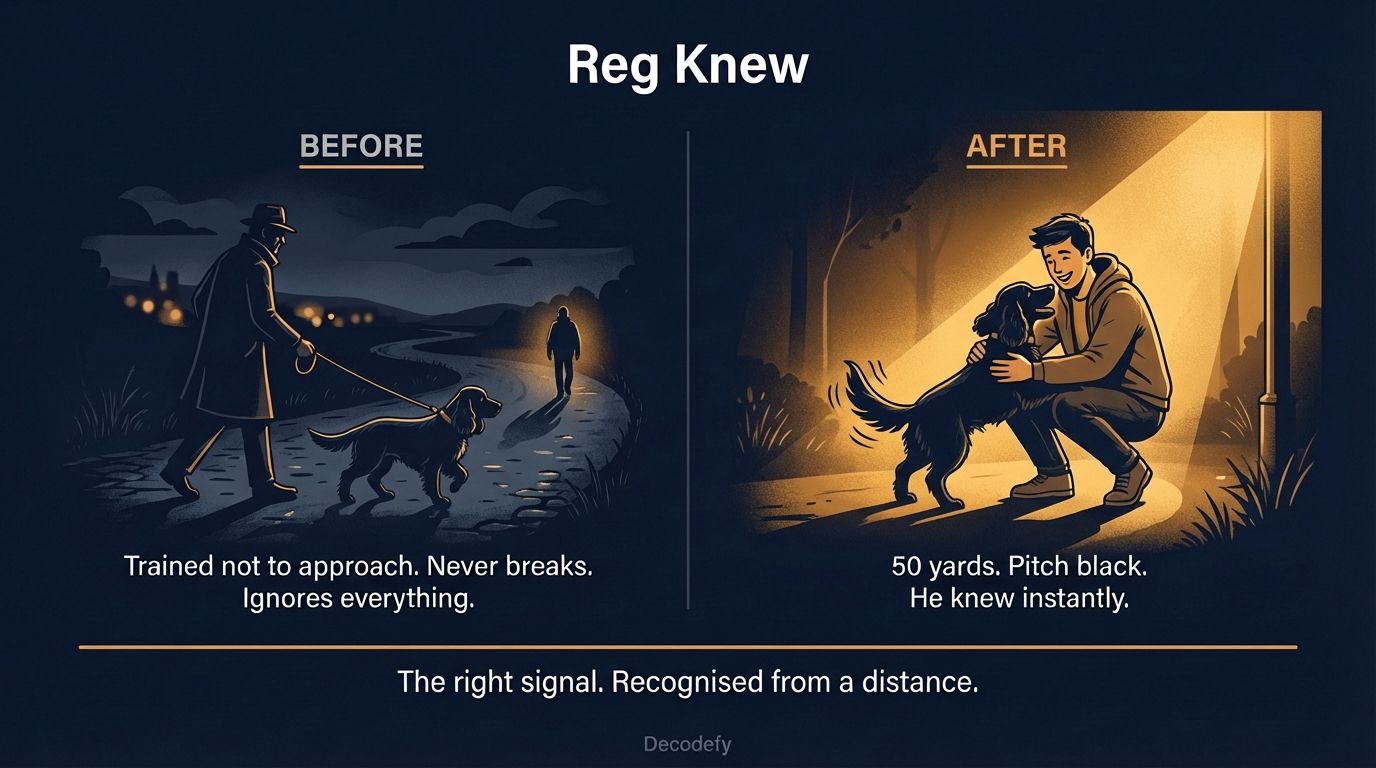
Two-panel illustration. Left panel: a man walking a black cocker spaniel. right panel: spaniel meets
By Jonathan Young March 18, 2026
A late night walk. A black cocker spaniel who recognised someone from 50 yards in the dark. And what it revealed about why brilliant UK experts keep losing work to lesser competitors who are better at marketing themselves.
Content repurposing diagram showing one blog post branching into eight different content formats inc
By Jonathan Young February 26, 2026
Most experts resist the content strategy that actually works. Here's why repurposing feels wrong when you're good at something - and why that feeling stops you building real authority.